Nicolas Maduro, the controversial Venezuelan leader, appeared in court after authorities arrested him in what President Trump called “a large scale strike against Venezuela and its leader, Nicolas Maduro.” The former Venezuelan leader and his wife, Cilia Flores, entered not guilty pleas to federal drug trafficking charges at their first New York court appearance.
Maduro now faces four major charges. These include narco-terrorism conspiracy and cocaine importation conspiracy. He also stands accused of possessing machineguns and destructive devices, along with conspiracy to possess such weapons. The arrest sent shockwaves through world news, especially since Venezuela holds about 20% of the world’s crude oil reserves underground, estimated at 303 billion barrels.
US officials executed an unprecedented operation to capture Maduro with nearly 200 personnel in Caracas. The meticulously planned raid caught the Venezuelan leader, Nicolas Maduro, completely off guard. The Metropolitan Detention Center in Brooklyn now holds both Maduro and Flores after their capture.
Maduro pleads not guilty in New York courtroom
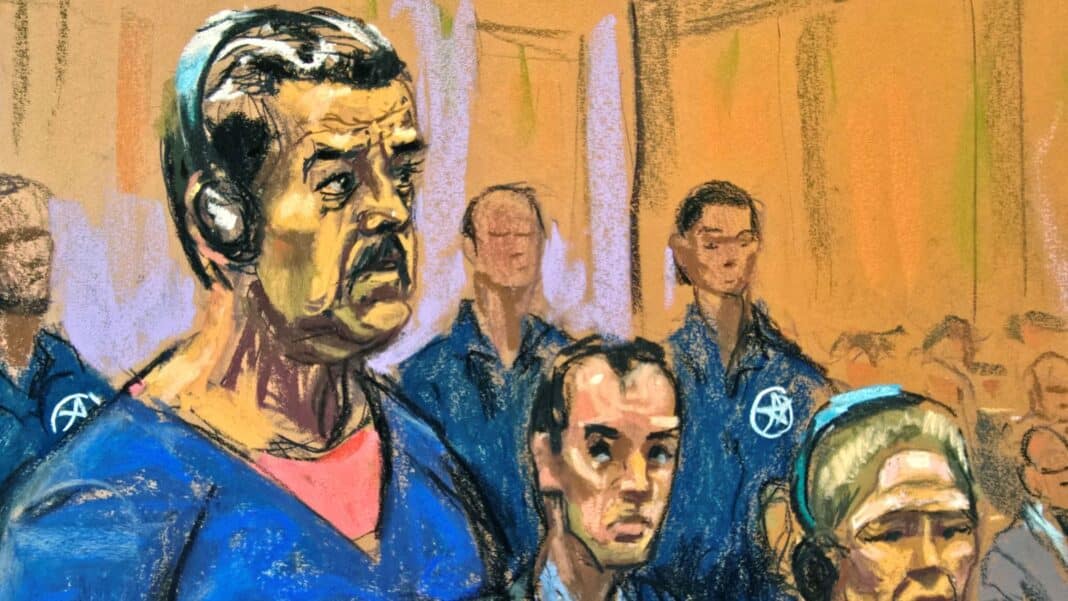
Nicolás Maduro appeared in a Manhattan federal courtroom Monday in shackles and prison clothes. He strongly denied all charges against him. DEA agents moved the deposed Venezuelan leader, Nicolás Maduro, and his wife from a Brooklyn federal jail to the courthouse. They flew by helicopter and traveled in an armored vehicle under heavy security.
Charges include narco-terrorism and weapons possession
Maduro could face life in prison if convicted of four serious criminal counts. The 25-page indictment lists these charges:
- Narco-terrorism conspiracy
- Cocaine importation conspiracy
- Possession of machine guns and destructive devices
- Conspiracy to possess machine guns and destructive devices
Prosecutors say Maduro and his co-conspirators worked with international drug trafficking groups in the last two decades. They shipped thousands of tons of cocaine into the United States and enriched themselves. The indictment also claims that Maduro and his wife ordered kidnappings, beatings, and murders of people who owed them drug money or threatened their trafficking operation.
Prosecutors say that Maduro, along with co-conspirators, worked with international drug trafficking groups in the last two decades. Maduro and his associates shipped thousands of tons of cocaine into the United States and enriched themselves. The indictment also claims that Nicolás Maduro and his wife ordered kidnappings, beatings, and murders of people who owed them drug money or threatened their trafficking operation.
Prosecutors have dropped their earlier claim about Maduro leading a drug cartel called “Cartel de los Soles.” They now acknowledge this name doesn’t represent a real organization—it’s Venezuelan slang from the 1990s that refers to public officials corrupted by drug money.
Maduro declares himself ‘still president’ during arraignment
Maduro stayed defiant throughout the proceedings. Through an interpreter, he responded to the plea request: “I am innocent. I am not guilty. I am a decent man. I am still president of my country”. Judge Alvin Hellerstein stopped him when he tried to explain beyond confirming his identity.
Maduro claimed he had been “kidnapped” from his Caracas home during the hearing. He declared: “I am a prisoner of war”. The former leader also said he learned about his rights for the first time in court.
His legal defense strategy has started taking shape. His attorney, Barry Pollack, pointed out “questions about the legality of his military abduction” and expected “voluminous” pretrial filings to address these legal challenges. Pollack argued that his client “is head of a sovereign state and entitled to the privilege” that status will give.
The U.S. government rejects this argument completely. They say Maduro got his position through fraudulent elections. The superseding indictment calls Maduro the “illegitimate ruler” of Venezuela.
Cilia Flores also pleads not guilty
Maduro’s wife, Cilia Flores, appeared in court and pleaded not guilty too. She told Judge Hellerstein through an interpreter: “Not guilty. Completely innocent”. She identified herself as “first lady of the Republic of Venezuela”.
Flores faces three criminal counts instead of her husband’s four: cocaine importation conspiracy and two weapons-related charges. She had visible injuries with bandages on her forehead and right temple.
Her attorney, Mark Donnelly, told the court that Flores got “most important injuries during her abduction.” These might include a fracture or heavy rib bruising. Donnelly asked for medical evaluation of injuries she got during the predawn raid on the presidential residence in Caracas.
Both defendants used headsets to hear Spanish translations of the English-language proceeding. The courtroom grew tense when a man in the public gallery shouted that the Venezuelan president would pay for his crimes.
This historic case against a foreign head of state stands as one of the most consequential legal actions by the U.S. government in decades. These court proceedings mark the beginning of a complex legal battle with major international implications.
US military captures Maduro in surprise Caracas raid
The U.S. military executed a precise operation to capture Venezuelan leader Nicolás Maduro. President Trump named this bold mission “Operation Absolute Resolve.” Military officials called it one of the most daring raids in recent history as elite U.S. forces entered Caracas under darkness to capture the Venezuelan leader and his wife.
Operation involved nearly 200 US personnel
Defense Secretary Pete Hegseth confirmed that “nearly 200 Americans” took part in the ground operation in downtown Caracas. The mission brought together military and law enforcement personnel from multiple service branches through cooperation with several U.S. intelligence agencies.
The operation’s magnitude was remarkable:
-
- More than 150 military aircraft launched from 20 different military bases and Navy ships
Maduro’s actions over the past years have led to his current legal troubles. The international community is closely watching how the case against Nicolás Maduro unfolds. His capture has been a significant event in the history of Venezuela, raising questions about the future leadership of the country.
- The fleet included fighter jets (F-18, F-22, F-35), bombers (B-1), drones, and reconnaissance aircraft
- Forces ranged in age from 20 to 49 years old
- Delta Force commandos led the ground extraction
- Helicopters from the elite 160th Special Operations Aviation Regiment transported the extraction team
Trump gave the final order to launch at 10:46 p.m. EST on Friday night. American forces reached Maduro’s compound—which Trump described as “a heavily fortified military fortress”—at 1:01 a.m. EST Saturday.
Maduro was unaware until minutes before arrest
The operation’s complete tactical surprise proved most remarkable. Gen. Dan Caine, chairman of the Joint Chiefs of Staff, confirmed Maduro had no warning of the raid.
“Nicolás Maduro got to meet some great Americans wearing night vision goggles three nights ago,” said Hegseth. “He didn’t know they were coming until three minutes before they arrived”.
Maduro’s wife first noticed something unusual. “I think I hear aircraft outside,” she said. Sources say U.S. forces caught the couple sleeping and “dragged them from their bedroom”.
Delta Force moved swiftly after entering the compound. They found Maduro just three minutes after breaching the entrance. Maduro tried to reach a steel safe room but failed. U.S. forces had him in custody within five minutes.
The operation met some resistance. Gunfire hit one U.S. helicopter but it stayed operational. Several American personnel suffered bullet and shrapnel injuries, though none life-threatening.
U.S. forces were “over the water” and leaving Venezuelan territory safely by 3:29 a.m. EST. The U.S.S. Iwo Jima, stationed about 100 miles off Venezuela’s coast, received Maduro and Flores.
Defense Secretary Hegseth reveals tactical details
Secretary Hegseth praised the operation at Mar-a-Lago with President Trump. He called it a display of “sheer guts and grit, gallantry and glory of the American warrior”.
The mission’s success came from careful planning. A clandestine CIA team entered Venezuela in August to learn about Maduro’s routines and security arrangements. U.S. forces gathered detailed intelligence about the Venezuelan leader using this information plus data from human sources and stealth drone surveillance.
“We knew where he moved, what he ate and even what pets he kept,” Gen. Caine revealed.
Delta Force commandos practiced extensively using a full-scale replica of Maduro’s compound in Kentucky. Caine explained: “We think, we develop, we train, we rehearse, we debrief, we rehearse again and again, not to get it right, but to ensure that we cannot get it wrong”.
The soldiers trained with what Trump called “massive blowtorches” to cut through the safe room’s steel walls if needed.
Both captives sustained injuries during their capture. Maduro’s wife suffered “significant injuries” including possible rib fractures and needed bandages on her forehead and right temple.
Trump announced Maduro’s capture on Truth Social at 4:21 a.m. EST Saturday. Pentagon officials called it one of the most precisely executed operations in recent military history.
Delcy Rodríguez assumes interim presidency in Venezuela
In light of Nicolás Maduro’s arrest, there are ongoing discussions about the future of Venezuela. Many citizens hope for a resolution that leads to stability and democracy, free from the influence of drug trafficking and criminal activities linked to Maduro’s regime.
Delcy Rodríguez, Venezuela’s former Vice President, took the oath as interim president on Monday, January 5, while Nicolás Maduro faced charges in a New York court. The National Assembly head and her brother, Jorge Rodríguez, administered the oath during a formal ceremony at the Federal Legislative Palace. Thousands of Venezuelans gathered outside to support both Maduro and their new interim leader.
Rodríguez denounces US action as kidnapping
Rodríguez voiced deep distress over Maduro’s capture during her oath-taking ceremony. “I come with pain over the kidnapping of two heroes who are being held hostage: President Nicolás Maduro and First Lady Cilia Flores,” she declared to the assembly. She repeatedly called Maduro’s extraction a “kidnapping” and “barbaric” act, describing it as “an atrocity that violates international law”.
Tarek William Saab, Venezuela’s prosecutor general, shared these views and called the operation “an illegal act of armed aggression of a terrorist nature”. Rodríguez then declared a seven-day mourning period to honor fallen military members.
Nicolás Maduro Guerra, Maduro’s son, made his first public appearance since the raid at the legislative palace. He warned that “if we normalize the kidnapping of a head of state, no country is safe. Today, it’s Venezuela. Tomorrow, it could be any nation that refuses to submit”.
Military and colectivos show mixed support
Military commanders have backed Rodríguez, along with defense minister Vladimir Padrino López and interior minister Diosdado Cabello, who control the armed forces, police, and intelligence services. Their relationship remains complex since “Rodriguez and Cabello have both operated at the heart of the government, legislature and ruling socialist party for years, but have never been considered close allies”.
Cabello, the government’s socialist party strongman, appeared on state television early Saturday to urge calm. People later saw him at a public gathering wearing a blue cap with the slogan, “To doubt is to betray”.
Pro-government paramilitaries known as colectivos now work with the military to maintain security and suppress potential dissent. Officials can detain and search civilians’ cellphones for proof of support for Maduro’s arrest under a state of emergency that bans any celebration of the US military operation.
Rodríguez signals willingness to cooperate with US
Rodríguez’s initially defiant tone changed toward cooperation. She offered to work on a “cooperative agenda” with the United States through social media. “We extend an invitation to the US government to work together on a cooperation agenda, oriented toward shared development, within the framework of international law, and to strengthen lasting community coexistence,” she stated.
Trump responded to this conciliatory message with threats that she could “pay a very big price” if she didn’t follow US demands. He declared that the US was “in charge” in Venezuela, adding that Rodríguez would remain in power only “so long as she does what we want”.
The Trump administration wants Venezuela’s new leadership to:
- Open Venezuela’s oil industry on terms favorable to US companies
- Crack down on narcotics trade
- Expel Cuban security personnel
- End Venezuelan cooperation with Iran
Rodríguez appeared to strengthen her position on Tuesday, stating in a televised address that “no foreign agent governs Venezuela”. She now faces the challenge of meeting Trump administration demands while maintaining credibility with her domestic base and powerful Maduro regime figures who might face US criminal charges.
Trump says US is ‘in charge’ of Venezuela
Donald Trump declared the United States now controls Venezuela after Maduro’s capture. His televised remarks and interviews emphasized American authority over Venezuela’s future. Trump claimed he now personally controls the South American country.
Trump outlines plan to ‘nurse Venezuela back to health’
Trump’s vision for Venezuela centers on controlling the country’s big oil reserves. He announced Venezuela would supply between 30 and 50 million barrels of oil to the United States—matching about two months of daily production. These resources, worth between $1.80 and $3.00 billion, would be under his control “to ensure it is used to benefit the people of Venezuela and the United States”.
“We’re going to have our very large United States oil companies, the biggest anywhere in the world, go in, spend billions of dollars, fix the badly broken infrastructure, the oil infrastructure and start making money for the country,” Trump stated during his televised address.
Trump told NBC News he believes rebuilding Venezuela’s oil industry would take “less than 18 months”. The project needs substantial investment but “oil companies will spend it, and then they’ll get reimbursed by us or through revenue”. He said reviving Venezuela’s oil sector would “reduce oil prices”.
Energy Secretary Chris Wright leads this effort and plans to meet executives from major oil companies like Exxon and ConocoPhillips[192]. The White House told companies they “must rebuild Venezuela’s crude-pumping infrastructure if they want compensation for assets seized by Caracas”.
Administration insists this is not regime change
Whatever Trump claims about controlling Venezuela, his administration says this was not a regime change operation. Senior officials describe Maduro’s capture as a law enforcement action against a wanted criminal.
The White House presents the military operation as targeting Maduro due to narco-terrorism charges, not as an attempt to overthrow Venezuela’s government. Speaker Johnson said, “Nicolas Maduro is responsible for the deaths of hundreds of thousands of Americans after years of trafficking illegal drugs and violent cartel members into our country”.
In spite of that, the administration’s actions point to broader strategic goals. Senator Roger Wicker revealed that “the government does intend to control the oil, taking charge of the ships, the tankers, and none of them are going to go to Havana”. A US naval blockade now controls waters around Venezuela.
Speaker Johnson defends legality of operation
House Speaker Mike Johnson strongly defended the military action as “decisive and justified” and essential to “protect American lives”. Johnson’s statement praised Trump for “putting American lives first” and “succeeding where others have failed”.
Other Republican leaders shared similar views. Senator Mike Lee mentioned the Secretary of State told him that the military action “was deployed to protect and defend those executing the arrest warrant”. Lee also claimed, “This action likely falls within the president’s inherent authority under Article II of the Constitution to protect U.S. personnel from an actual or imminent attack”.
Senate Majority Leader Chuck Schumer raised serious concerns. He warned that “when America tries to do regime change and nation building in this way, the American people pay the price in both blood and in dollars”. Democratic lawmakers responded with a bipartisan war powers resolution to block any further military action against Venezuela without congressional approval.
Opposition leader Machado criticizes US for sidelining her
Venezuelan opposition leader María Corina Machado has blasted the Trump administration’s decision to back Delcy Rodríguez instead of supporting her democratic movement after Maduro’s dramatic capture. Machado, who received the Nobel Peace Prize in December, expressed her frustration at being pushed aside despite her claim of winning Venezuela’s disputed 2024 election.
Machado vows to return to Venezuela
The opposition leader wants to head back to her homeland right away, she revealed in her first interview since the US removed Maduro from power. “I’m planning to go back to Venezuela as soon as possible,” she told Fox News. She believes now is the perfect time to return after staying hidden for over 16 months, only briefly emerging to accept the Nobel Prize.
“As I’ve always said, every day I make a decision where I am more useful for our cause. That’s why I stayed in hiding for over 16 months, and that’s why I decided to go out,” she explained. She stands firm about her political support, saying that “in free and fair elections, we will win by over 90% of the votes”.
She took to social media shortly after Maduro’s capture to declare that Edmundo González, her stand-in candidate who supposedly won more than two-thirds of the vote in last year’s disputed election, should take charge as commander-in-chief immediately.
Says Rodríguez is part of the same corrupt regime
Machado completely rejects Rodríguez’s role as interim president. She describes her as “one of the main architects of torture, persecution, corruption, narco-trafficking”. During her CBS Evening News interview, she stressed that “everybody in Venezuela and abroad knows perfectly who she is and the role she has played” in Maduro’s oppressive government.
She points to Rodríguez as “the main link” connecting Venezuela with Russia, Iran, and “other countries that have criminal activities”. The Venezuelan people have rejected Rodríguez, who Machado says cannot be trusted by international investors.
She acknowledges the US might have “instructed Rodríguez to take certain actions regarding further dismantling of the criminal structure as a path towards a complete transition to democracy in Venezuela”. All the same, she maintains that “nobody trusts her,” which could make Rodríguez’s role as interim president challenging.
Bolton calls ignoring Machado a ‘major mistake’
John Bolton, the former National Security Advisor, has criticized Trump’s strategy harshly. He sees the decision to sideline Machado as “a major mistake”. Trump’s attack on Venezuela’s opposition leader left Bolton “dumbfounded,” and he believes “the administration is making a big mistake by throwing Machado under the bus”.
Bolton claims that “unquestionably she and Edmundo González… are both really the legitimate government of Venezuela”. They represent “a fundamental plank in the legitimacy of the action that Trump took in removing Maduro from Venezuela”.
He believes “the Venezuelan opposition has a capacity to govern” and that Machado and González can “provide stability,” unlike Rodríguez and other Maduro regime members.
Trump’s choice to support Rodríguez over Machado seems personal. Sources close to the White House say Trump’s reluctance stems from Machado accepting the Nobel Peace Prize – an award he has “openly coveted”. One insider revealed her acceptance was the “ultimate sin” and suggested “if she had turned it down and said, ‘I can’t accept it because it’s Donald Trump’s,’ she’d be the president of Venezuela today”.
Gunfire erupts in Caracas amid confusion and drone reports
Gunfire and anti-aircraft rounds lit up the night sky near the Miraflores presidential palace in Caracas on Monday night. The incident created panic and confusion throughout the capital just days after Nicolás Maduro’s arrest. Residents heard intense small-arms fire and loud blasts around 8:00 p.m. local time. Many feared a potential coup or another foreign attack might be underway.
As tensions rise in Caracas following Nicolás Maduro’s arrest, the political landscape continues to shift. Many are anxious about the repercussions of his capture and what it means for Venezuela’s future governance.
Police fire at unauthorized drones near presidential palace
Venezuela’s Ministry of Communication and Information confirmed that police shot warning rounds at drones “flying without permission” near the presidential palace. Media outlets verified videos showing anti-aircraft fire over Caracas when security officials detected unauthorized aerial vehicles in the restricted airspace.
The city’s main ministries evacuated immediately as a safety measure. A witness described seeing “two red lights in the sky” but no aircraft above. Security forces responded faster, and footage showed BMP-3 infantry fighting vehicles moving near the palace.
Conflicting reports from paramilitary groups
Intercepted communication between regime-associated paramilitary groups showed the most important confusion among different security units. Members of colectivos—pro-government paramilitaries—called for backup at first and claimed “confrontations” had happened at the palace.
Later, another member clarified it was just a “misunderstanding”. Reports suggested the Presidential Guard mistook Venezuelan Army surveillance drones for hostile threats while testing new palace security protocols. This unexpected error triggered the barrage. The whole ordeal highlighted Venezuela’s fragile security situation after Maduro’s removal, as armed groups managed to keep their high alert status.
Congress demands answers on legality and cost of operation
Congressional leaders erupted in bipartisan outrage and asked for explanations about the military operation to capture Nicolás Maduro. The Trump administration received sharp criticism for the Venezuela raid’s legality and its failure to consult lawmakers beforehand. This situation could trigger a constitutional showdown.
Lawmakers say they were not briefed in advance
The administration broke conventional protocol by conducting the operation without notifying the “Gang of Eight” – top congressional leaders who typically receive consultation on sensitive national security matters. President Trump openly admitted he bypassed Congress “because he did not trust senior lawmakers to keep his plans confidential”.
Representative Jim Himes, the top Democrat on the Intelligence Committee, stated firmly: “Whether you think Congress leaks or not, the law says you must brief Congress. This is just another example of absolute lawlessness on the part of this administration”.
The Senate Judiciary Committee’s bipartisan leaders didn’t receive the original classified briefing, despite their jurisdiction over the Department of Justice. Republican Chairman Chuck Grassley and Democratic Ranking Member Dick Durbin released an unusual joint statement declaring there was “no legitimate basis” for their exclusion.
War powers resolution expected in Senate
Senate Democrats responded by announcing plans to force a vote on suspending military action in Venezuela. Senator Tim Kaine’s war powers resolution would make Trump cease operations unless Congress explicitly approves them.
“It is long past time for Congress to reassert its critical constitutional role in matters of war, peace, diplomacy and trade,” Kaine declared in a statement. His previous attempt at similar legislation failed in November with support from just two Republicans.
The current measure needs at least four Republicans to break ranks with their party to succeed. A comparable resolution faced defeat in the House last December by a vote of 211-213.
Concerns raised about future military actions
The Venezuela operation might set a dangerous precedent, lawmakers warned. Senator Kaine questioned: “Where will this go next? Will the President deploy our troops to protect Iranian protesters? To enforce the fragile ceasefire in Gaza? To battle terrorists in Nigeria? To seize Greenland or the Panama Canal?”
Senate Minority Leader Chuck Schumer shared these concerns, noting that the briefing “raised far more questions than it answered”. He added: “I did not receive any assurances that we would not try to do the same thing in other countries”.
Republican supporters also asked for more details. Senator Thom Tillis noted: “I’ve got to see what strategy there is. I don’t know how you do that without boots on the ground. And I don’t support boots on the ground”.
Oil companies hesitant to re-enter Venezuela despite Trump push
Major US oil companies show great reluctance to quickly re-enter Venezuela’s market despite President Trump’s enthusiasm after Maduro’s arrest. Representatives from petroleum giants remain cautious as they review the risks of returning to a country that previously seized their assets.
Energy Secretary to meet with oil executives
Energy Secretary Chris Wright will meet oil executives at the Goldman Sachs Energy Conference in Miami on January 7. The administration has started talking with companies about their potential return to Venezuelan drilling operations. Trump also plans to meet chief executives from Chevron, ConocoPhillips, and Exxon at the White House. He appears ready to help them recover seized assets if they commit to rebuilding Venezuela’s oil sector.
Industry wary of political instability and safety
Oil majors need substantial security guarantees before investing. “The appetite for jumping into Venezuela right now is pretty low. We have no idea what the government there will look like,” one industry source revealed. Companies worry about their personnel’s safety and equipment in this politically volatile environment. Analysts expect companies to move extremely carefully without an “iron-clad guarantee” that protects their investments. ConocoPhillips spokesperson Dennis Nuss stated it would be “premature to guess on any future business activities”.
Experts say rebuilding oil infrastructure could take a decade
In stark comparison to this, Trump’s 18-month timeline, industry experts expect a much longer recovery. Venezuela’s return to its 1990s production level of 3 million barrels daily would take 7-10 years and need about $183 billion through 2040. A modest increase of 500,000 barrels per day would require over $10 billion investment across 2-3 years. “It’s probably going to take three years for any kind of production bounce,” noted Dan Pickering of Pickering Energy Partners. Venezuela’s heavy crude needs specialized equipment, making development challenging with global oil prices staying relatively low at $60 per barrel.
Nicolás Maduro’s dramatic capture and prosecution marks an extraordinary chapter in US-Venezuelan relations that has revolutionized Latin America’s geopolitical map. President Trump’s claim that the United States now stands “in charge” of Venezuela shows how unprecedented this military intervention is. Interim president Delcy Rodríguez now faces a tough balancing act between Maduro’s regime loyalty and American demands for cooperation and oil concessions.
Nicolás Maduro’s arrest has created a pivotal moment in US-Venezuelan relations. As the new leadership navigates the aftermath of his capture, the focus remains on how to address the underlying issues that have plagued the nation.
Without doubt, this operation has created deep divisions in Washington. Congressional leaders across party lines want explanations about the raid’s legality and strategic purpose, especially since the administration failed to notify them beforehand. Their worries go beyond Venezuela, as they question if similar unilateral military actions could happen elsewhere without Congress knowing.
María Corina Machado’s exclusion from power transition plans adds another layer of controversy. She keeps pushing for democratic legitimacy, which directly challenges Trump administration’s practical choice to work with Rodríguez instead of backing opposition figures who claim they won the election.
Maduro’s political influence has dramatically shifted since his capture. The challenges facing Venezuela now hinge on how effectively the interim leadership can manage the transitional period post-Maduro.
Big oil companies seem cautious about returning to Venezuela, despite Trump’s enthusiastic promises. They see the reality of the country’s broken infrastructure and unstable political climate, which contradicts the White House’s optimistic timeline for economic recovery.
Caracas streets still experience confusion and occasional violence, showing that removing Maduro alone can’t quickly fix this deeply divided nation. Trump administration officials say they targeted Maduro personally rather than pushing for regime change, yet that’s exactly what happened.
Maduro now sits in a New York cell while Venezuela stands at a crucial turning point. The country’s huge oil reserves, which once made it one of Latin America’s richest nations, now act as both an asset and liability in shaping its future. We have a long way to go, but we can build on this progress toward stability and democracy in the months ahead.